What Are Grubs?
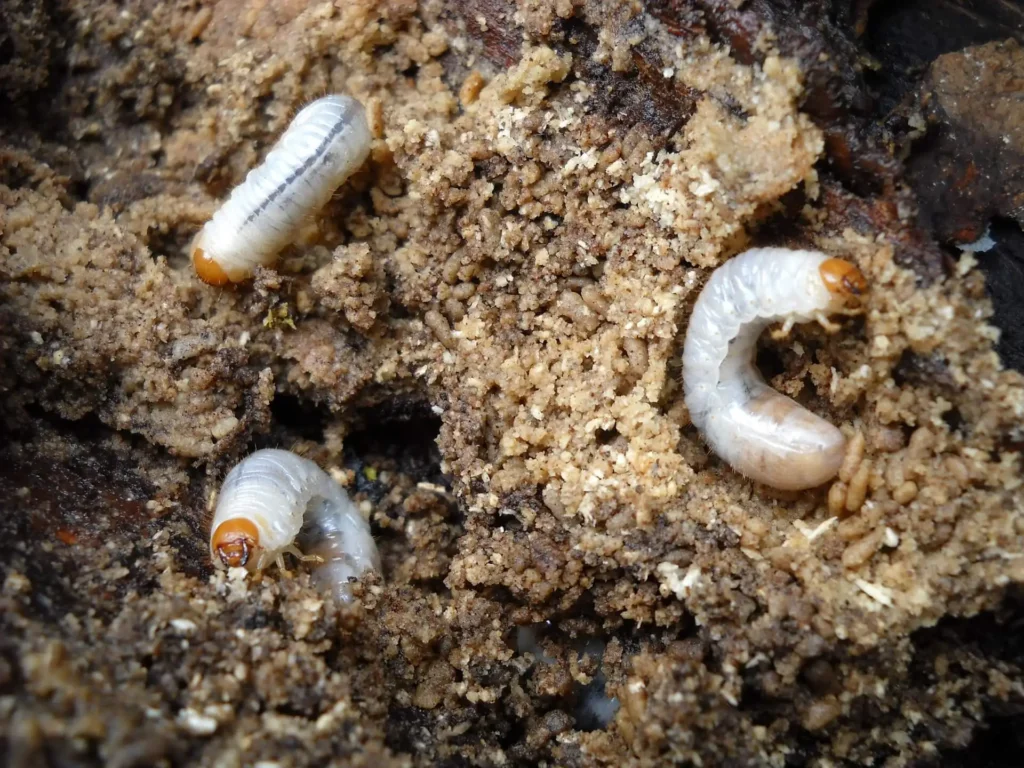
Of all the pests that can damage a Chicagoland lawn, grubs are among the most destructive. Grubs are the larval stage of scarab beetles — including Japanese beetles, June bugs, and European chafers — that burrow into the soil and feed on grass roots. They’re C-shaped, creamy white with a brown head, and range from a quarter inch to over an inch long depending on the species and age.
When and How Grubs Damage Your Lawn
Grub activity in northern Illinois follows a predictable cycle. Adult beetles lay eggs in the soil during June and July. Those eggs hatch into tiny larvae that begin feeding on roots almost immediately. By late August and September the grubs are large enough to cause visible damage — dead patches of turf that feel spongy underfoot and can be rolled back like a carpet. Grubs also attract secondary damage: skunks, raccoons, and crows will tear up turf overnight to get at the larvae, turning a small brown spot into a major mess.
In spring, overwintered grubs resume feeding for a few weeks before pupating and emerging as adult beetles, restarting the cycle. That’s why many lawns that looked fine going into winter suddenly show damage in March and April.
How to Get Rid of Grubs
Timing is everything with grub control. There are two main approaches:
- Preventive treatment (June–July): A systemic insecticide applied before eggs hatch stops grubs before they can do any damage. Products containing chlorantraniliprole or imidacloprid are watered into the soil and remain active for months.
- Curative treatment (August–October): If grubs are already present and feeding, a fast-acting product such as trichlorfon (Dylox) kills existing larvae within days. Dylox is a granular product that targets the grub’s nervous system. It can be purchased at most home improvement stores, or we at Greener Living can apply it for you.
Whichever product you use, watering it in within 24 hours of application is critical — the active ingredient needs to move through the thatch layer and into the root zone where grubs feed.
Signs You Have a Grub Problem
- Irregular brown patches that don’t respond to watering.
- Turf that lifts easily from the soil, with few or no intact roots.
- Nocturnal animal digging — raccoons and skunks tearing up the lawn.
- Increased bird activity on the lawn, particularly starlings and crows.
Let Us Handle It
If you’re seeing the signs above, don’t wait — grub damage only gets worse. Our technicians can confirm the infestation with a simple sod-pull test and apply the right product the same day. Call Greener Living at 224-415-3698 or request a free estimate to get your lawn back on track.